
Isra Hirsi: The Inspiring Climate Justice Organiser Shaping a New Generation
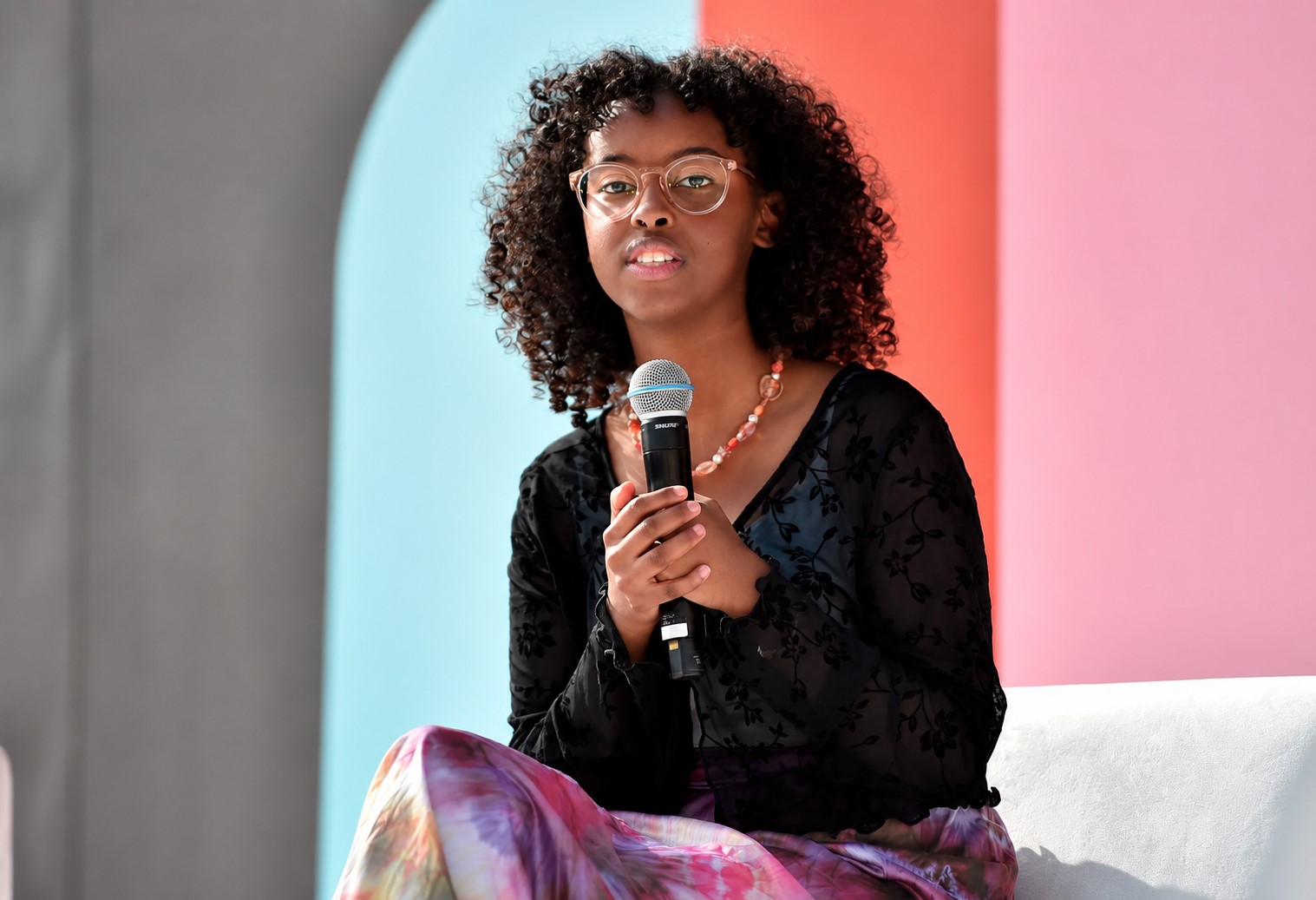
isra hirsi
Isra Hirsi is an American climate and social justice organiser who became nationally known while still at secondary school. She helped launch the U.S. Youth Climate Strike, coordinated student-led demonstrations, and pushed the climate movement to give greater attention to race, poverty, public health and communities facing the heaviest environmental harm. Her work has also extended into racial justice, youth politics and pro-Palestinian student organising.
Born into a politically active Somali-American family, Hirsi could easily have been known only as the daughter of Congresswoman Ilhan Omar. Instead, she built a public identity through her own campaigns, speeches and organising work. Her central message is clear: climate change is not only about weather, carbon or wildlife. It is also about who has clean water, who breathes polluted air, who is displaced, and whose voice is missing from decisions.
| Full Name | Isra Hirsi |
|---|---|
| Date of Birth | 22 February 2003 |
| Age | 23 years old |
| Place of Birth | Minneapolis, Minnesota, United States |
| Nationality | American |
| Ethnicity | Somali-American |
| Profession | Climate and social justice organiser |
| Education | Sociology degree from Barnard College |
| Mother | Ilhan Omar |
| Father | Ahmed Abdisalan Hirsi |
| Siblings | Adnan and Ilwad |
| Known For | Co-founding the U.S. Youth Climate Strike |
| Relationship Status | Not publicly confirmed |
Table of Contents
ToggleIsra Hirsi and the U.S. Youth Climate Strike
Hirsi’s national breakthrough came in 2019, when she co-founded the U.S. Youth Climate Strike with Haven Coleman and Alexandria Villaseñor. Inspired by the global school strike movement led by Greta Thunberg, the American group aimed to unite students across states and demand stronger climate policy.
At only 16, Hirsi served as a co-executive director and helped coordinate hundreds of youth-led actions. The first major national strike took place on 15 March 2019, followed by another on 3 May. The organisation worked with more than 100 organisers and over 15 partner groups, proving that young campaigners could manage a national movement through digital tools and local leadership.
Hirsi also helped push for a dedicated climate debate during the 2020 Democratic presidential campaign. Although the Democratic National Committee did not approve that format, climate policy gained a larger place in candidate forums and national discussion.
An Intersectional View of Climate Justice
The most distinctive part of Hirsi’s message was her focus on intersectionality. She argued that climate action could not succeed if it ignored race, migration, income and historical inequality. A flood, heatwave or pollution crisis does not affect every household in the same way. Communities with fewer resources often face greater danger and have less power during recovery.
She also drew attention to climate refugees and people forced from their homes by disasters, drought and rising seas. For Hirsi, a fair climate movement needed to protect those on the front line and include them in leadership. She wanted young people of colour to see environmental organising as a space where they belonged.
Rather than treating climate change as one separate issue, she connected it with housing, healthcare, clean water, Indigenous rights and racial justice. That wider view became central to her influence.
Early Life, Age and Family Background
Isra Hirsi was born on 22 February 2003 in Minneapolis, Minnesota, United States. She is 23 years old as of 2026 and holds American nationality. Her family is of Somali heritage, and her upbringing was closely connected to Minneapolis, especially the diverse Cedar-Riverside area.
Her mother, Ilhan Omar, is a Somali-American politician who entered the United States House of Representatives in 2019 after serving in the Minnesota legislature. Her father is Ahmed Abdisalan Hirsi. Isra is the eldest of three children, with two younger siblings, Adnan and Ilwad.
Politics and community action were part of family life, but Hirsi’s interest in activism grew through direct experience. At the age of 12, she joined a protest after the police killing of Jamar Clark, a Black man whose death led to major demonstrations in Minneapolis. The experience introduced her to organised protest and showed her how young people could take part in civic life.
Her connection to Minneapolis remained strong as her work expanded. She has spoken warmly about its parks, libraries, Somali-owned businesses and community life.
Education and the Start of Her Activism
Hirsi attended South High School in Minneapolis and graduated in 2021. During her first year, she joined the school’s environmental club. The experience became a turning point, although she felt the group paid too little attention to environmental racism and the daily risks faced by Black, brown, Indigenous and low-income communities.
Issues such as polluted neighbourhoods, unsafe water, oil pipelines and unequal access to healthy public spaces mattered deeply to her. Her concerns were shaped by the Flint water crisis, extreme winter weather in Minnesota and pipeline development in her state. She also worked with local youth groups, including iMatter Minneapolis and MN Can’t Wait.
After secondary school, Hirsi enrolled at Barnard College, which is affiliated with Columbia University in New York City. She began her studies in 2021 and completed a sociology degree in 2025. The subject fitted her interest in power, inequality, institutions and collective action.
Broader Social and Campus Activism
Hirsi’s work has never stayed within one campaign. She has supported racial justice, gun-violence prevention and progressive political causes. Her public voice became especially visible again in April 2024 during pro-Palestinian protests at Columbia University.
At the time, she was a Barnard junior and an organiser connected with Columbia Students for Justice in Palestine and Columbia University Apartheid Divest. She joined a Gaza Solidarity Encampment that called for university divestment, financial transparency and protection for student protesters.
Barnard suspended her on 18 April 2024, and New York police arrested her with more than 100 other demonstrators after clearing the encampment. She was released later that day. Despite the disruption, she completed her sociology degree the following year.
The episode showed that her activism had expanded into questions of war, institutional power, protest rights and student solidarity.
Personal Interests and Social Media Presence
Hirsi has used Instagram, X and TikTok to share political ideas, communicate with young supporters and promote campaigns. Digital media helped her work with organisers in different states when she was still a teenager. She has also warned that posting alone is not the same as genuine activism; online attention must lead to learning and real participation.
Outside formal campaigning, she has shown an interest in debate, theatre, fashion and sustainable shopping. As a teenager, she took part in policy debate and had previously performed in theatre before organising took more of her time. She has described a love of colour, coordinated clothing and second-hand fashion. Her preference for keeping and reusing clothes connects personal style with environmental values.
Her attachment to Minneapolis remains an important part of her identity.
Lesser-Known Facts About Isra Hirsi
Hirsi wrote the speech for her first organised climate strike at the Minneapolis Central Library. She also balanced high school with college classes during the busiest period of her early national activism.
Her younger sister became a source of motivation, making the future effects of climate change feel personal rather than distant.
She once hoped to attend Harvard and become a lawyer, but organising changed her priorities and reduced her interest in status.
Her role in the youth climate movement also began through digital contact. An Instagram message helped connect her with young organisers preparing a national school strike.
Current Work and Public Significance
After graduating from Barnard in 2025, Hirsi remained best known as an organiser whose work links environmental justice with broader struggles over race, inequality and political power. Her social platforms continue to present her as a Minneapolis-rooted activist with ties to New York and Washington, D.C.
Her importance does not rest on holding elected office or leading a large institution. It comes from helping change who could be seen as a climate leader. As a Black Muslim young woman of Somali heritage, she challenged narrow ideas about the environmental movement and insisted that communities facing pollution and displacement must shape the solutions.
Major Achievements and Recognition
Hirsi received the Brower Youth Award in 2019 for leading a nationwide climate strike. The honour recognises young environmental leaders who create practical change through organising and community work. She also received the Voice of the Future Award that year.
In 2020, Fortune included her in its 40 Under 40 category for government and politics. The publication recognised her work as a co-founder, environmental justice organiser, political consultant and Black Lives Matter activist. It also credited her with helping mobilise more than 100,000 young people for climate justice.
Her influence reached youth media as well. She became a Teen Vogue cover figure with her mother in 2020 and used interviews to discuss activism, identity and the pressure of growing up in the public eye. She has also written and spoken about the need for more Black and brown leadership within environmental campaigns.
Before university, Hirsi served as chair of the Minnesota chapter of the High School Democrats of America during the 2018–2019 term. She also worked as development director for the Gravel Institute, adding political communication and organisational experience to her climate work.
Frequently Asked Questions
Who is Isra Hirsi?
Isra Hirsi is an American climate and social justice organiser. She is best known for co-founding the U.S. Youth Climate Strike and promoting environmental justice for marginalised communities.
How old is Isra Hirsi?
Isra Hirsi was born on 22 February 2003. She is 23 years old as of 2026.
Who are Isra Hirsi’s parents?
Her mother is Ilhan Omar, a Somali-American politician and member of the United States House of Representatives. Her father is Ahmed Abdisalan Hirsi.
What is Isra Hirsi famous for?
She became widely known after helping establish the U.S. Youth Climate Strike in 2019. Her activism connects climate change with racial inequality, public health and economic justice.
Where did Isra Hirsi study?
She attended South High School in Minneapolis before studying sociology at Barnard College in New York City.
Is Isra Hirsi married?
There is no verified information confirming that Isra Hirsi is married. She keeps her private relationships away from public attention.
Conclusion
Isra Hirsi’s journey from a Minneapolis school environmental club to national climate leadership shows how youth organising can influence public debate. She helped build a major student strike network, brought environmental racism into climate conversations and earned recognition before reaching adulthood.
Her later work in racial justice and campus protest shows a wider commitment to collective action. Although her mother’s political career brought early attention, Hirsi developed a voice and record of her own. Her lasting significance lies in connecting climate policy with fairness, representation and everyday life, while encouraging young people to treat their age as a source of power rather than a reason to remain silent.
About the Author