
what is digital freelancing
The modern workplace is changing rapidly. Millions of professionals now use the internet to offer their skills, communicate with clients, complete projects, and earn money without working in a traditional office. This flexible way of working is known as digital freelancing.
For students, professionals, stay-at-home parents, and people looking for an additional income stream, freelancing can provide valuable opportunities. However, success requires more than creating an account on a freelance platform. A freelancer must develop useful skills, build trust, communicate professionally, and consistently deliver high-quality work.
This guide explains what is digital freelancing, how it works, which services are in demand, and how beginners can build a sustainable online career.
What Is Digital Freelancing?
Digital freelancing is a form of self-employment in which individuals provide services to clients through digital channels. Instead of working permanently for one employer, a digital freelancer may work with multiple clients on short-term or long-term projects.
Most of the work is completed remotely using a computer, internet connection, communication software, and specialized digital tools. The freelancer and client may live in different cities or even different countries.
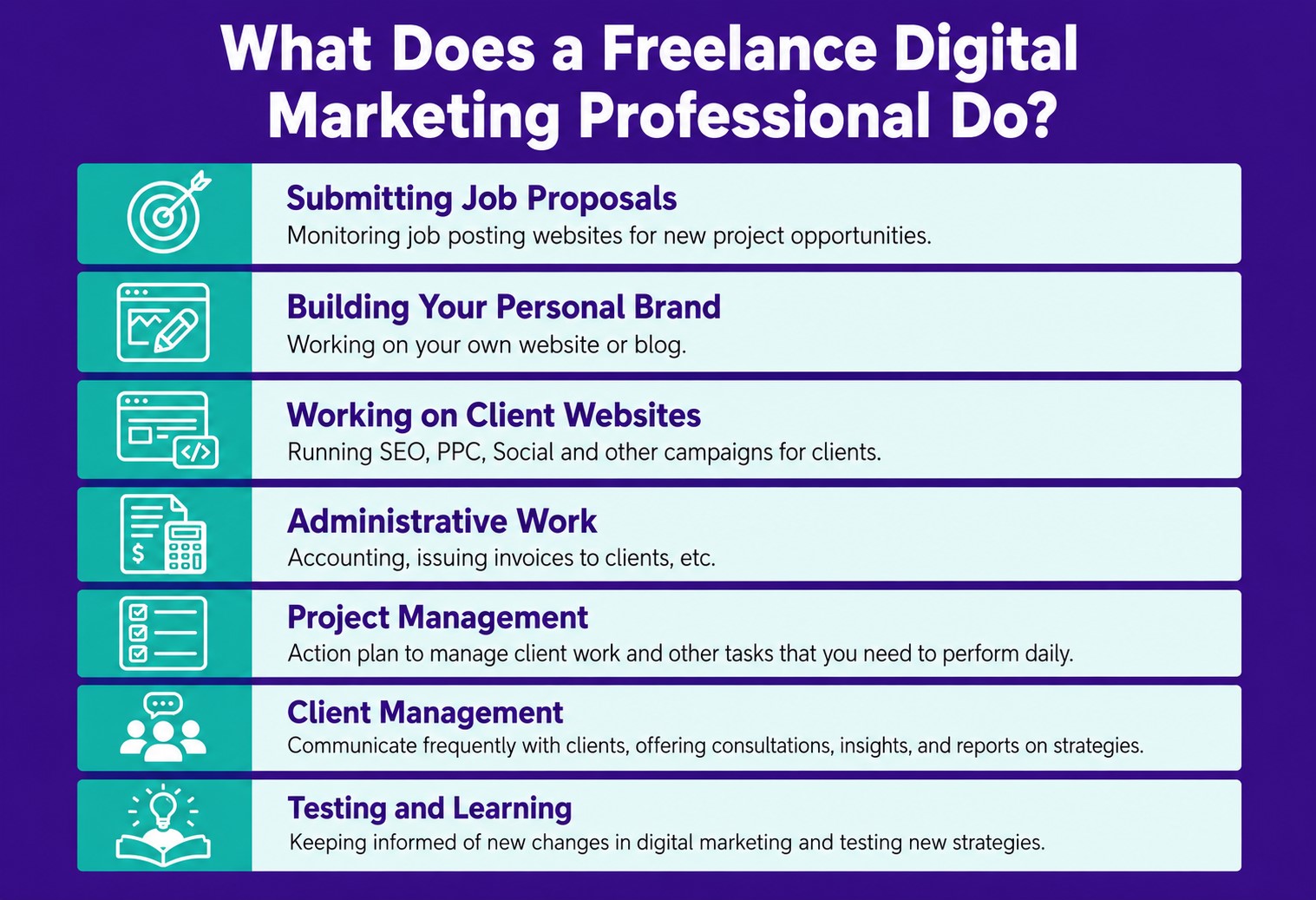
Common digital freelance services include writing, graphic design, website development, social media management, data analysis, virtual assistance, video editing, digital marketing, and online consulting.
The main difference between traditional employment and freelancing is independence. Employees usually follow a fixed schedule and receive a regular salary. Freelancers generally choose their projects, set their rates, manage their working hours, and remain responsible for finding clients.
How Digital Freelancing Works
The freelancing process usually begins when a business or individual needs a specific service. The client publishes a project, contacts a freelancer directly, or searches for a professional with the required skills.
The freelancer then reviews the project requirements and submits a proposal. This proposal may include the price, expected delivery time, work process, and relevant experience.
Once both parties agree, the freelancer completes the work and submits it for review. The client may approve the project immediately or request reasonable revisions. Payment is released after the agreed work has been delivered.
Project-Based and Hourly Freelancing
Freelancers are commonly paid through one of two methods.
In project-based freelancing, the client pays a fixed amount for a complete task. For example, a writer may charge a fixed price for a 1,500-word article.
In hourly freelancing, the freelancer is paid according to the number of hours worked. This method is often used for ongoing assistance, consulting, programming, and administrative support.
Why Digital Freelancing Is Growing
Digital freelancing has expanded because businesses increasingly rely on remote workers and specialized professionals. Hiring a freelancer allows a company to access specific expertise without recruiting a permanent employee.
Technology has also made remote collaboration easier. Video meetings, cloud storage, project management systems, and instant messaging allow clients and freelancers to work together efficiently from almost anywhere.
Another major reason for its growth is flexibility. Many professionals want greater control over their careers, schedules, and earning potential. Freelancing allows them to choose work that matches their interests and abilities.
Benefits for Freelancers
Freelancers can often decide when and where they work. A person may work from home, a shared workspace, or while traveling, provided the project is completed professionally and on time.
Digital freelancing also provides access to international clients. A skilled professional is no longer limited to job opportunities available in the local market.
Freelancers may also earn more as their skills and reputation improve. Unlike a fixed salary, freelance income can increase when a person raises rates, attracts better clients, or offers higher-value services.
Benefits for Businesses
Businesses use freelancers to reduce costs, meet urgent deadlines, and access specialized talent. A small company may not need a full-time website developer, but it can hire one for a specific project.
Freelancers also help companies manage changing workloads. During a busy period, a business can hire additional support without making a long-term employment commitment.
Popular Digital Freelancing Skills
Understanding what is digital freelancing also requires knowing which services can be offered online. Almost any skill that produces a digital result can become a freelance service.
Content Writing and Copywriting
Content writers create blog posts, website pages, guides, product descriptions, and educational materials. Copywriters produce persuasive content for advertisements, sales pages, emails, and promotional campaigns.
Strong research ability, grammar, originality, and an understanding of the intended audience are essential for both roles.
Graphic Design
Graphic designers create logos, social media posts, brochures, advertisements, business cards, presentations, and brand materials. They use design principles and software to communicate ideas visually.
A professional portfolio is particularly important in this field because clients want to see previous design work before hiring.
Website Development
Website developers build, improve, and maintain websites. Their work may include coding, fixing technical errors, improving speed, creating online stores, and developing custom features.
Developers with strong technical knowledge can often secure long-term projects and higher-paying clients.
Digital Marketing
Digital marketers help businesses promote products and services online. Their responsibilities may include search engine optimization, paid advertising, email marketing, content strategy, and campaign analysis.
Businesses value marketers who can connect their work with measurable results such as increased traffic, leads, engagement, or sales.
Virtual Assistance
Virtual assistants provide remote administrative support. Their tasks may include managing emails, scheduling meetings, entering data, preparing documents, conducting research, and providing customer service.
This field can be suitable for beginners who have strong communication, organization, and computer skills.
Video Editing and Animation
Video editors transform raw footage into polished content for advertisements, websites, online courses, and social media platforms. They may add music, captions, transitions, graphics, and special effects.
Demand for video professionals continues to grow as businesses use more visual content in their marketing strategies.
How to Start Digital Freelancing
Starting a freelance career requires preparation. Beginners often make the mistake of offering too many unrelated services. It is usually better to develop one clear skill before expanding into additional areas.
Choose a Marketable Skill
Select a skill that matches your interests, abilities, and market demand. Research the type of work clients request and identify the standards expected in that field.
For example, someone interested in writing should learn grammar, research, content structure, and basic search engine optimization. A future designer should understand layout, typography, color, and professional design software.
Build a Professional Portfolio
A portfolio contains examples of your work. It helps potential clients judge your skills and working style.
Beginners can create sample projects even if they have not worked with paying clients. A writer can prepare sample articles, while a designer can create example logos or social media campaigns.
Portfolio samples should be clear, relevant, and carefully edited. Quality is more valuable than quantity.
Create a Strong Freelancer Profile
A professional profile should explain what service you provide, who you help, and what results clients can expect. Avoid writing a long biography that does not focus on the client’s needs.
Include a clear title, a professional photograph when appropriate, relevant skills, experience, and portfolio examples. The profile should be free from spelling and grammar errors.
Write Personalized Proposals
A successful proposal should show that you understand the project. Generic proposals are often ignored because they do not address the client’s specific requirements.
Begin by briefly discussing the client’s problem. Explain how you will complete the task, mention relevant experience, and provide a realistic timeline.
The proposal should be confident and professional without making promises that cannot be guaranteed.
Set Fair and Competitive Rates
New freelancers sometimes charge extremely low prices to attract clients. Although competitive pricing may help secure an early project, rates that are too low can create the impression of poor quality.
Consider the complexity of the work, expected time, market rates, software expenses, revisions, and platform fees. Rates should gradually increase as experience, demand, and expertise grow.
Essential Qualities of a Successful Freelancer
Technical ability is important, but clients also value reliability and professionalism. A highly skilled freelancer may lose clients by missing deadlines or communicating poorly.
Clear Communication
Freelancers should ask relevant questions before starting a project. Requirements, deadlines, payment terms, deliverables, and revision limits should be clearly understood.
Regular updates can prevent misunderstandings, especially during large or complex projects.
Time Management
Freelancers must organize their own schedules. Accepting too many projects can lead to rushed work, stress, and missed deadlines.
Using a calendar, task list, or project management system can help freelancers prioritize assignments and manage their time effectively.
Consistent Quality
One successful project is not enough to build a stable career. Clients expect consistent quality across every assignment.
Freelancers should review their work before delivery, follow instructions carefully, and correct errors. Consistent performance can lead to positive reviews, repeat business, and referrals.
Continuous Learning
Digital industries change quickly. Software, marketing methods, client expectations, and platform rules continue to develop.
Successful freelancers regularly update their skills through practice, courses, professional communities, and industry resources.
Challenges of Digital Freelancing
Although freelancing offers freedom, it also includes uncertainty. Income may vary from month to month, especially during the early stages.
Freelancers must find clients, manage payments, maintain records, handle revisions, and plan for periods with less work. They may also face difficult clients, unclear instructions, or intense competition.
Working independently can sometimes feel isolating. Freelancers should maintain healthy routines, take regular breaks, and communicate with other professionals.
Scams are another concern. Freelancers should avoid suspicious projects, requests for large upfront payments from the worker, and clients who refuse to provide clear requirements.
How to Build a Long-Term Freelance Career
A sustainable freelance career depends on reputation and relationships. Delivering strong work on time encourages clients to return.
Freelancers should focus on a specific area where possible. Specialization can make a professional easier to trust and allow them to charge higher rates. For example, instead of offering general writing, a freelancer might specialize in financial content, technology articles, or healthcare copywriting.
Keeping records of income, expenses, contracts, deadlines, and client conversations is also important. Freelancers should treat their work as a real business rather than an occasional activity.
Over time, a freelancer may build a personal brand, attract direct clients, develop a small agency, create digital products, or provide consulting services.
The Future of Digital Freelancing
Remote work, digital business, and international collaboration are likely to remain important parts of the modern economy. Companies increasingly seek flexible access to specialized skills, while professionals continue to look for greater independence.
Artificial intelligence and automation may change how certain freelance tasks are completed, but human judgment, creativity, strategy, communication, and problem-solving remain valuable. Freelancers who learn to use new tools responsibly can improve productivity and offer more advanced services.
Final Thoughts
So, what is digital freelancing? It is an independent way of earning income by providing professional services to clients through online channels. It offers flexibility, global opportunities, and the potential for career growth, but it also requires discipline, patience, and responsibility.
A successful freelancer does not rely only on talent. They develop marketable skills, create a strong portfolio, communicate clearly, respect deadlines, and continue learning.
Digital freelancing is not usually a shortcut to instant income. However, with consistent effort and professional standards, it can become a reliable career, a profitable business, or a valuable source of additional income.
Frequently Asked Questions
1. What is digital freelancing?
Digital freelancing is a form of self-employment in which people provide services to clients through the internet. Freelancers can work in areas such as writing, graphic design, web development, digital marketing, video editing, and virtual assistance.
2. How can a beginner start digital freelancing?
A beginner should choose one marketable skill, learn the necessary tools, create several portfolio samples, and build a professional freelance profile. The next step is to apply for suitable projects with personalized proposals and realistic prices.
3. Which skills are best for digital freelancing?
Popular digital freelancing skills include content writing, copywriting, graphic design, website development, social media management, search engine optimization, data analysis, video editing, and virtual assistance. The best skill depends on a person’s interests, experience, and market demand.
4. Can digital freelancing become a full-time career?
Yes, digital freelancing can become a full-time career when a freelancer develops strong skills, builds a reliable client base, manages income carefully, and delivers consistent quality. However, reaching a stable income usually requires time, patience, and continuous effort.
5. What are the main challenges of digital freelancing?
The main challenges include irregular income, high competition, difficult clients, payment risks, tight deadlines, and the need to find new projects regularly. Freelancers can reduce these challenges through clear contracts, professional communication, good time management, and long-term client relationships.
About the Author
